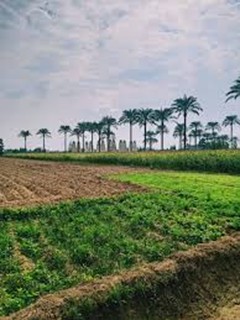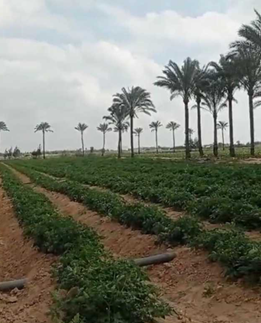
General information and context: The Living Lab is located in Nubaria, in the western Nile Delta, where agroforestry-type integrations of fruit trees and field crops are widespread but often not managed as structured production systems. Windbreaks and combinations such as palm dates with beans or citrus with soybeans exist, and agroforestry is increasingly recognized in sustainable agricultural policies. Government interest in integrated agricultural practices and improved resource-use efficiency supports this development.
Main challenges (faced by agroforestry farmers): Farmers face a lack of awareness regarding agroforestry management, absence of economic incentives, limited access to technical knowledge and restricted funding opportunities, all of which hinder its broader implementation.
Opportunities for development and scaling up of agroforestry: Large areas of reclaimed land, modern irrigation networks, commercial farms and increasing interest from small-scale farmers in diversifying income offer strong opportunities for scaling agroforestry. Active cooperatives, water user associations and engagement from scientific and financial institutions further support expansion.
Objectives / Innovations targeted: The Living Lab aims to implement integrated agroforestry systems using field-crop experiments, increase yield and improve water and soil-use efficiency with smart sensors, and apply expert systems for decision-making on irrigation, fertilization and yield optimization. It also works on developing innovative business models, linking products to sustainable value chains and supporting governance through establishing collaborative networks between farmers, consultants, and government entities. In addition, policy briefs will be created to introduce and promote agroforestry to decision makers.
Demo Site 1
General information: The site is located in a village in the Nubaria region, in the west Nile Delta southwest of Alexandria at an elevation of 20–30 m a.s.l. in a hot and dry desert climate and is flood or drip irrigated. It consists of citrus trees or palm dates with green beans or soybeans.
General farming approach: Conventional farming
Design of the agroforestry system and field trial: The total field trial covers 4200 m² and involves alley cropping.
Expected benefits from the agroforestry system: Anticipated agronomic benefits include reduced evaporation, water savings and increased productivity, while expected environmental advantages are improved soil health, enhanced biodiversity and carbon sequestration. Reduced fertilizer and pesticide costs, along with diversified income are among the system’s projected economic benefits. Social benefits include community participation and empowering youth and women.
Monitoring / Targeted ecosystem services: Monitoring activities concentrate on a wide range of ecosystem services. They include provisioning services, such as the production of soya beans, green beans, mung beans, and fruit. They also incorporate regulating services, including aspects related to groundwater quality, soil health, and the carbon and water footprint. In addition, supporting services are considered, with particular attention to indicators of soil fertility, the presence of beneficial soil fauna, and overall nutrient cycling. Finally, monitoring includes the cultural ecosystem service related to the ecotourism potential of the area.
Demo Site 2 (Distinction between sites unclear)
General information: The site is located in a village in the Nubaria region, in the west Nile Delta southwest of Alexandria at an elevation of 20–30 m a.s.l. in a hot and dry desert climate and is flood or drip irrigated. It consists of citrus trees or palm dates with green beans or soybeans.
General farming approach: Conventional farming
Design of the agroforestry system and field trial: The total field trial covers 4200 m² and includes alley cropping.
Expected benefits from the agroforestry system: Anticipated agronomic benefits include reduced evaporation, water savings and increased productivity, while expected environmental advantages are improved soil health, enhanced biodiversity and carbon sequestration. Reduced fertilizer and pesticide costs, along with diversified income are among the system’s projected economic benefits. Social benefits include community participation and empowering youth and women.
Monitoring / Targeted ecosystem services: Monitoring activities concentrate on a wide range of ecosystem services. They include provisioning services, such as the production of soya beans, green beans, mung beans, and fruit. They also incorporate regulating services, including aspects related to groundwater quality, soil health, and the carbon and water footprint. In addition, supporting services are considered, with particular attention to indicators of soil fertility, the presence of beneficial soil fauna, and overall nutrient cycling. Finally, monitoring includes the cultural ecosystem service related to the ecotourism potential of the area.
The business models will look at direct income streams through the sale of citrus fruits, palm dates, soya beans, green beans and wheat, as well as value-added processing of fresh fruits and animal feed. Ecosystem services payments include technical assistance and training for smallholder farmers to become more resilient and sustainable through partnership projects between the government and international development institutions, carbon credits offered by value chain leaders to reduce carbon footprint and support the greening of the desert and contract farming for implementing sustainable standards. Indirect income streams through financing opportunities for agroforestry in Egypt can be improving and maintaining water canals for irrigation managed by agricultural cooperatives and water user association, and government financial support and subsidized loans for modern irrigation and fertilizers.